

Huawei is making waves in the wearable technology industry with a major health innovation that could change the future of smartwatches. While brands like Apple and Samsung continue to dominate the global smartwatch market, Huawei has introduced a world-first diabetes risk detection feature that is grabbing worldwide attention.
This breakthrough is being seen as a significant step forward in health-focused wearable tech. However, despite its promise, there’s an important catch — the feature is currently not available in every region, limiting its global impact.
Huawei Introduces a World-First Diabetes Feature in Smartwatches
Huawei recently unveiled a new smartwatch health tool designed to assess the user’s risk of developing diabetes. This is one of the first times a major consumer wearable brand has offered a diabetes-related monitoring feature before competitors like Apple Watch or Samsung Galaxy Watch.
Unlike traditional glucose monitors, Huawei’s smartwatch does not measure blood sugar directly. Instead, it uses advanced sensors and AI-powered analysis to detect early metabolic signals that may indicate diabetes risk.
This positions Huawei as a leader in next-generation smartwatch health tracking.
How the Diabetes Risk Detection Works
Huawei’s smartwatch feature relies on long-term health monitoring using optical sensor technology, including photoplethysmography (PPG). These sensors track changes in blood flow patterns under the skin over several days.
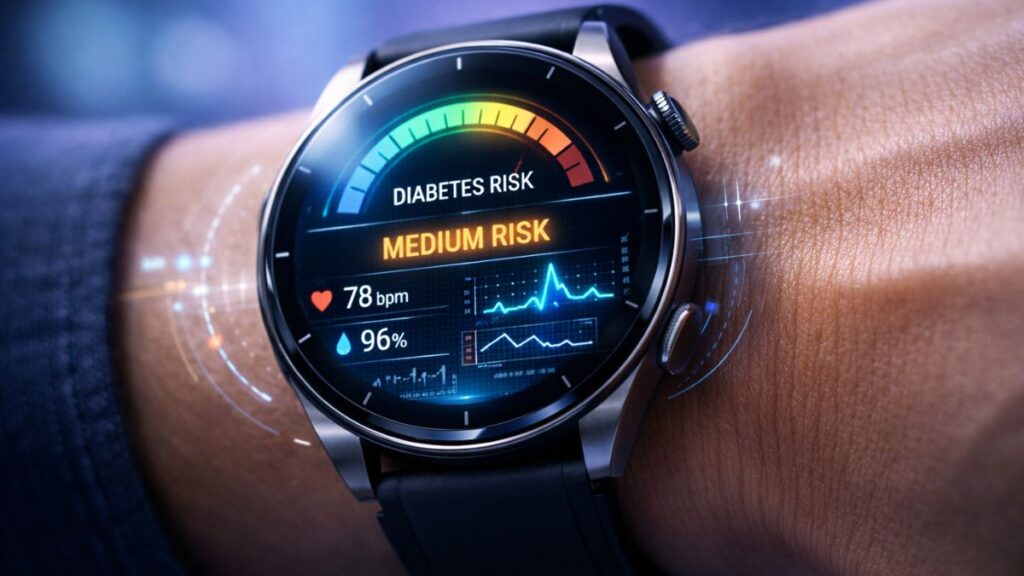
The smartwatch collects data over a period of 3 to 14 days, analyzing indicators such as:
- Heart rate trends
- Blood circulation patterns
- Physiological changes linked to metabolism
- Long-term wellness metrics
The system then generates a diabetes risk assessment score, helping users identify whether they may need medical consultation.
While this is not a replacement for medical testing, it could become a powerful early warning tool.
Why This Feature Matters for the Smartwatch Industry
Diabetes is one of the fastest-growing health concerns worldwide. Millions of people remain undiagnosed until symptoms become serious, making early detection critical.
Huawei’s move highlights a major shift in wearable technology:
- Smartwatches are evolving beyond fitness tracking
- Health monitoring is becoming more preventive
- AI-driven wellness insights are expanding rapidly
Apple and Samsung have been rumored to be working on non-invasive glucose monitoring for years, but Huawei’s announcement puts pressure on them to deliver similar features sooner.
The Catch: Limited Availability Across Regions
Despite the excitement, Huawei’s diabetes feature comes with a major limitation: it is not available everywhere, especially in markets like the United States.
Due to regulatory challenges and Huawei’s limited device presence in certain countries, many consumers may not have access to this breakthrough anytime soon.
Health-related smartwatch features often require extensive approvals, which could slow down global expansion.
This limited rollout remains one of the biggest barriers to widespread adoption.
Not a Medical Device or Glucose Monitor
It’s important for users to understand that Huawei’s smartwatch is not a certified medical glucose monitor.
The feature does not provide real-time blood sugar readings (mg/dL or mmol/L). Instead, it offers a risk-based wellness assessment.
People who already have diabetes must continue using clinical-grade monitoring devices and follow professional medical advice.
Huawei’s tool should be viewed as a supportive health awareness feature, not a replacement for diagnosis or treatment.
Final Thoughts: A Bold Step Toward the Future of Wearable Health Tech
Huawei’s smartwatch breakthrough represents a major leap forward in smartwatch innovation. By introducing a diabetes risk detection feature ahead of Apple and Samsung, Huawei is pushing wearable health technology into a new era.
However, limited availability and the lack of direct glucose measurement mean users should treat it as an early warning system rather than a full medical solution.
As competition grows, this innovation could inspire Apple, Samsung, and other tech giants to accelerate the development of advanced health-monitoring wearables worldwide.